Currently viewing: Remuneration report / Next: Implementation report
At Life Healthcare we feel a deep sense of responsibility to ensure we appropriately reward, retain and develop our people. The remuneration committee is committed to reviewing and evolving the Group’s reward and talent philosophies on an ongoing basis to ensure appropriate incentives for “doing what is right”, fair application in the organisation, enforceability, and alignment to market best practice.
Chairman: Human Resources and Remuneration Committee
Royden Vice
This report comprises three sections:
Section 1 Human Resources and Remuneration Committee Chairman’s Report (Remco)
Section 2 Life Healthcare’s remuneration philosophy, policy and framework
Section 3 Implementation Report
1. |
REMUNERATION COMMITTEE CHAIRMAN'S REPORTDear Shareholder I am pleased to present the 2020 remuneration report on behalf of the Board. The COVID-19 pandemic has had a severe impact on our employees, our clinical partners, our suppliers, our patients and our financial outcomes. From a people perspective, our primary objectives have been to ensure the safety and wellbeing of our employees, whilst remaining cognisant of the financial sustainability of the Company. The Company has demonstrated resilience, teamwork, innovation and adaptability under these difficult circumstances. Key developments and highlights for the year include:
Impact of COVID-19 on shareholdersLife Healthcare's share price has not been immune to the volatility in equity markets during the 2020 financial year due to COVID-19. We recognise that shareholders have been impacted by the decline in the value of their shares during this period. The share price decline also impacted executives and employees via their individual shareholding or in respect of employees via the impact on the Employee Share Plan. The decline in share price also impacts the underlying value of performance shares in the Long-Term Incentive Plan. The alignment between shareholders and Life Healthcare executive is clearly demonstrated through this reality. Remuneration outcomes The Board remains focused on ensuring there is a robust and rigorous process in place whereby significant oversight and prudence are applied to ensure remuneration outcomes are aligned both with individual and company-wide performance, with outcomes delivered to our shareholders. In addition, it aims to retain key critical skills and be market competitive ensuring productivity, performance excellence and Company sustainability. Certain adaptations to remuneration elements have been required to effect this:
Shareholder engagementAt our January 2020 AGM, we received a vote of 69.9% in favour of our implementation report and 66.5% in favour of our remuneration policy, and hence engaged with various shareholders via a virtual platform on the issues that led to the Company not receiving the requisite percentage of 75% or more. Supporting me during the engagement was Mustaq Brey, chairman of the Board, Dr Victor Litlhakanyane, the Chairman-designate, Pieter van der Westhuizen, the then-Acting Chief Executive Officer, Avanthi Parboosing, the Group Company Secretary and Chris Gouws, the HR Executive for southern Africa. Taking their valuable suggestions into account, the following commitments with regards to our remuneration practices have
In the event that this remuneration and implementation report receive less that the required support at the annual general meeting, Life Healthcare will continue to invite dissenting shareholders to provide reasons for such votes in writing, where, after further engagements may be scheduled. Achievement of Remuneration objectivesOne of our primary objectives has been to ensure that the Company's employee value proposition allows the attraction and retention of the human capital required to deliver on the Company's strategic objectives. It is pleasing to note that turnover of employees in South Africa has remained at the low levels experienced during FY2019 (10.8% vs 10.5%). I am therefore satisfied that we have achieved the outcomes we have set notwithstanding the many challenges we have faced during the past year. Future Focus AreasLooking forward, Human Resources and Remuneration Committee (Remco) main focus areas will be to ensure:
Yours sincerely Royden Vice Chairman: Human Resources and Remuneration Committee |
2. |
REMUNERATION PHILOSOPHY, POLICY AND FRAMEWORK |
2.1 |
Scope and aims of the PolicyThe remuneration policy is approved by the Board and forms part of our operating philosophy, policies and protocols. Our remuneration framework and policies, which are a key component of our broader employee value proposition, aim to:
Life Healthcare's remuneration philosophy is to make certain that employees are rewarded fairly and appropriately for their contribution to value creation for the Group. Our remuneration philosophy informs our reward framework and guides policy. In a continually evolving context, we continually review our remuneration policies to ensure our approach remains relevant, fair and responsible. The Group periodically consults market survey providers for an indication of the guaranteed remuneration and annual cash incentive payments made generally and sectorally. We utilise these inputs, along with guidance from external remuneration experts, to assess our positioning compared to the market in terms of key talent. We then overlay various contextual factors, including industry trends, the Group's financial position and legislative requirements, evaluating our performance in delivering fair and equitable remuneration as part of our employee value proposition. Ultimately our goal is to design reward for business sustainability, balancing what is required to attract and retain the best talent, with affordability considerations. |
|||||||||||||||||||||||||||||||||||||||||||||||||||||||||||||||||||||||||||||||||||||||||||||||||||||||||||||||||||||||||||||||||||||||||||||||||||||||||||||||||||||||||||||||||||||||||||||||||||||||||||||||||||||||||||||||||||||||||||||||||||||||||||||||||||||||||||||||
2.2 |
Wage Gap (South Africa)In this context, the Group applies the 10:10 methodology to gauge the fairness of our wage gap. The 10:10 ratio expresses the sum of the salaries of the highest paid 10% of employees as a ratio of the sum of the salaries earned by the lowest earning 10% of employees. The larger this ratio, the more inequality exists, the ratios based on 2019 South Africa salaries are as follows: 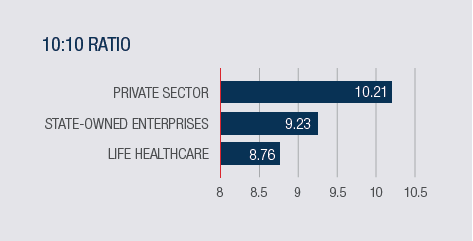
21st Century's salary database (www.21century.co.za) - (Morton & Blair, 2019) Life Healthcare demonstrates a smaller income gap between the top and lower earners compared to both SOEs and the private sector in general. In addition, the Company annually reviews and grants higher increases to the lowest earners as it aims to transition from applying a minimum wage to a minimum living wage. This process is supported by a focus on skills development. |
|||||||||||||||||||||||||||||||||||||||||||||||||||||||||||||||||||||||||||||||||||||||||||||||||||||||||||||||||||||||||||||||||||||||||||||||||||||||||||||||||||||||||||||||||||||||||||||||||||||||||||||||||||||||||||||||||||||||||||||||||||||||||||||||||||||||||||||||
2.3 |
Remuneration GovernanceOur Human Resources and Remuneration Committee follows a systematic agenda to review remuneration strategy and overall policy. It oversees, without interfering in areas where management ordinarily have discretion, the implementation of policy over an annual cycle. This verifies that policy enables fair and equitable remuneration, and ensures sound governance. In SA we comply with King IV and draft guidelines and practice notes of the IoDSA. Formal feedback is provided to the Board annually on how the policy objectives are being achieved, and this feedback forms part of the process of obtaining approval of the remuneration report. Life Healthcare's remuneration philosophy and supporting policies are widely shared with employees. |
|||||||||||||||||||||||||||||||||||||||||||||||||||||||||||||||||||||||||||||||||||||||||||||||||||||||||||||||||||||||||||||||||||||||||||||||||||||||||||||||||||||||||||||||||||||||||||||||||||||||||||||||||||||||||||||||||||||||||||||||||||||||||||||||||||||||||||||||
2.4 |
Performance ManagementThe aim of our performance management process is to promote alignment of individual and team performance objectives with strategic focus areas, as follows:
|
|||||||||||||||||||||||||||||||||||||||||||||||||||||||||||||||||||||||||||||||||||||||||||||||||||||||||||||||||||||||||||||||||||||||||||||||||||||||||||||||||||||||||||||||||||||||||||||||||||||||||||||||||||||||||||||||||||||||||||||||||||||||||||||||||||||||||||||||
2.5 |
Malus and ClawbackThe Company has achieved its objective, as advised in the FY2019 remuneration report, of including malus and clawback provisions in both the short and long-term incentive schemes. The scheme rules and award letters to eligible employees now include policy provisions for both malus and clawback. Funds will be recovered after following due process and will not preclude legal action in instances where actions constitute a criminal act. In the event that a participant is found guilty following a disciplinary hearing, the payment will be withheld if not yet paid, or will be recovered from the individual with a three-year period after delivery of payment. Where bona fide errors have been made, the monies will be corrected or recovered against the ensuing incentive payment. |
|||||||||||||||||||||||||||||||||||||||||||||||||||||||||||||||||||||||||||||||||||||||||||||||||||||||||||||||||||||||||||||||||||||||||||||||||||||||||||||||||||||||||||||||||||||||||||||||||||||||||||||||||||||||||||||||||||||||||||||||||||||||||||||||||||||||||||||||
2.6 |
Company-matched sharesThe Company offered a once-off opportunity of Company matched shares to the CEO on engagement and extended this opportunity to the CFO. The intention of this offer is to retain the executive as well as to encourage shareholding in the Company thereby aligning to shareholder interests. The condition being that these executives needed to personally acquire Life Healthcare shares and the Company would match the shares with a premium. The matched shares are restricted and held in an escrow account and will vest over five years, provided certain performance conditions (set out below) are met. Forfeiture of the matched Company shares will apply should the performance and employment conditions not be met. Vesting will occur in three equal tranches, i.e. in December 2023, December 2024 and December 2025.
The total shareholding of the above purchase (personal and matched shares) represented as a percentage of guaranteed package, together with additional LHC shares held in a personal capacity as at 30 September 2020 amounts to:
|
|||||||||||||||||||||||||||||||||||||||||||||||||||||||||||||||||||||||||||||||||||||||||||||||||||||||||||||||||||||||||||||||||||||||||||||||||||||||||||||||||||||||||||||||||||||||||||||||||||||||||||||||||||||||||||||||||||||||||||||||||||||||||||||||||||||||||||||||
2.7 |
Executive RetentionRetention shares It was agreed that shares would be purchased for the International CEO and SA CEO to ensure retention and hence operational stability and continuity following the exit of Shrey Viranna as CEO effective 29 February 2020. The number of shares and vesting dates are reflected in the table below:
The shares are restricted and held in an Escrow account with Investec from 1 April 2020 and will vest subject to specified performance conditions being met by both executives. The performance conditions are as follows:
|
|||||||||||||||||||||||||||||||||||||||||||||||||||||||||||||||||||||||||||||||||||||||||||||||||||||||||||||||||||||||||||||||||||||||||||||||||||||||||||||||||||||||||||||||||||||||||||||||||||||||||||||||||||||||||||||||||||||||||||||||||||||||||||||||||||||||||||||||
2.8 |
Employment ContractsExecutive employment contracts for management have historically been subject to a three-month notice period and a subsequent six-month restraint of trade. These conditions apply to the CFO, however, given the fact that the Company operates globally, the Company's policy position has been changed to:
These provisions have been applied to the employment contract of the new CEO and will be extended to the rest of the Group executive committee. |
|||||||||||||||||||||||||||||||||||||||||||||||||||||||||||||||||||||||||||||||||||||||||||||||||||||||||||||||||||||||||||||||||||||||||||||||||||||||||||||||||||||||||||||||||||||||||||||||||||||||||||||||||||||||||||||||||||||||||||||||||||||||||||||||||||||||||||||||
2.9 |
Non-Executive Directors RemunerationFees in respect of non-executive directors are reviewed on an annual basis, and a comprehensive benchmarking exercise was conducted by an independent remuneration consultant against other industry sector companies (our peer group, consisting of direct and indirect competitors) and other similar-sized JSE listed companies. Fees are paid as a combination of a retainer and a fee per meeting to ensure alignment with emerging market practice. To align with shareholder recommendations, the Human Resources and Remuneration Committee approved an average 5% increase across-the Board to the non-executive fees effective 1 January 2020, however, a few anomalies to market required higher increases to the following committee members' fees, which resulted in an overall increase of 7.5% for FY2020:
|
|||||||||||||||||||||||||||||||||||||||||||||||||||||||||||||||||||||||||||||||||||||||||||||||||||||||||||||||||||||||||||||||||||||||||||||||||||||||||||||||||||||||||||||||||||||||||||||||||||||||||||||||||||||||||||||||||||||||||||||||||||||||||||||||||||||||||||||||
2.10 |
Group Reward IntegrationOver the past two years we have continued to integrate remuneration practices across countries to ensure Group alignment and application of best practice. Alignment of international territories with Life Healthcare in terms of job grading, benchmarking principles and short and long-term incentives is in place. Our integration efforts in the coming months will focus on organisational culture, global mobility and talent management, HR metrics, and reporting on retirement fund matters at a global level. |
|||||||||||||||||||||||||||||||||||||||||||||||||||||||||||||||||||||||||||||||||||||||||||||||||||||||||||||||||||||||||||||||||||||||||||||||||||||||||||||||||||||||||||||||||||||||||||||||||||||||||||||||||||||||||||||||||||||||||||||||||||||||||||||||||||||||||||||||
2.11 |
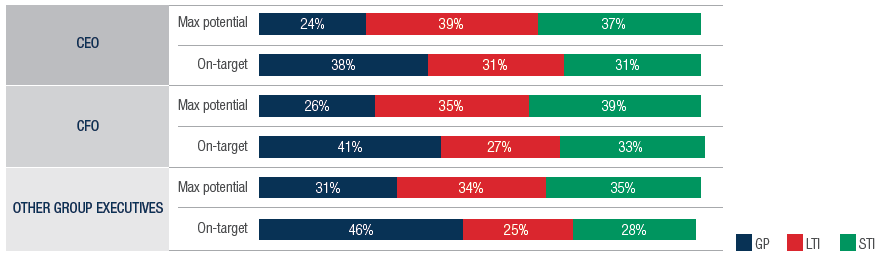
Remuneration FrameworkWe take a total reward approach to remuneration. Our remuneration framework has been designed to achieve a fair and sustainable balance between annual, short and long-term variable remuneration, where participation in short and long-term incentive schemes depend on an employee's role and level within the Group. The King IV principles relating to fair and responsible remuneration guide application of our policy. The Remco will continue to monitor our remuneration practices to ensure that any potential for unfair bias is eliminated and fairness prevails in the attraction and retention of top talent. The remuneration components offered in Life Healthcare include guaranteed package, short- and long-term incentives and share based incentives. Remuneration mix The on-target and maximum pay mix apportionment for the Group executive in Life Healthcare is graphically displayed below:
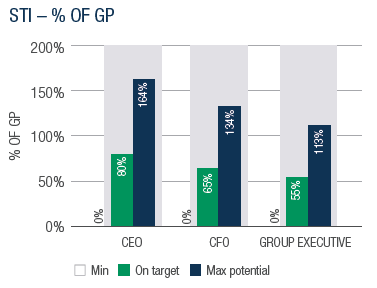
As indicated above, the relationship between the respective reward elements is illustrated on the basis of on-target and maximum potential payment in terms of incentive schemes. The maximum outperformance potential on the VCP scheme (STI) is illustrated in paragraph 2.13 below. Details of each remuneration element are outlined below: |
|||||||||||||||||||||||||||||||||||||||||||||||||||||||||||||||||||||||||||||||||||||||||||||||||||||||||||||||||||||||||||||||||||||||||||||||||||||||||||||||||||||||||||||||||||||||||||||||||||||||||||||||||||||||||||||||||||||||||||||||||||||||||||||||||||||||||||||||
2.12 |
Guaranteed remuneration
Life Healthcare has a formal guaranteed pay progression model that rewards employees for their contribution to value creation. As an organisation it is critical that we ensure correct base pay, as guaranteed pay serves as the foundation of our reward design and is hence a crucial determinant of variable pay. Specifically, we will pay up to 75th percentile for exceptional/top performing employees, ensuring that average guaranteed pay for the Group remains anchored at market median via a symmetrical overall pay distribution. We assess three pay progression factors: comparative ratio to market rate for job, individual performance and potential. Poor performers and those whose premium positioning in range is not supported by their performance, potential or criticality of skills, will receive commensurately lower increases. The Company makes extensive use of survey houses to support its reward benchmarking process. The services of Deloitte, PwC Remchannel and PE Corporate (Willis Towers Watson) are utilised. We typically benchmark against market median, but in respect of top talent and critical skills, our reward philosophy allows payment at the 75th percentile. In respect of the Group executives, a bespoke reward survey is provided by PE Corporate/Willis Towers Watson which takes cognisance of geographic spread, employee levels, complexity of market and the financial accountability. The survey targets companies with similar characteristics. This pay model is supported by a disciplined and rigorous annual talent review process that focuses on both performance and potential, using best practice tools to interrogate and plot each of these dimensions. This talent process will be refined over time to ensure a robust talent identification and management practice which is shared across the Group, demonstrating factually that we out-reward top talent in a disciplined and rigorous way.
|
|||||||||||||||||||||||||||||||||||||||||||||||||||||||||||||||||||||||||||||||||||||||||||||||||||||||||||||||||||||||||||||||||||||||||||||||||||||||||||||||||||||||||||||||||||||||||||||||||||||||||||||||||||||||||||||||||||||||||||||||||||||||||||||||||||||||||||||||
2.13 |
Variable compensation plan (VCP)
Measures, threshold and maximum rewards as a percentage of 'on-target' performance for all employees are as follows:
We continue to set challenging stretch targets during our budget process, where budgeted target is only achieved if executives deliver fully to plan. Thus, 95% achievement of financial targets attracts 100% of on-target reward and 100% achievement attracts 125% of on-target reward, where we benchmark our STI reward levels at 'on-target' level and thus demand excellent performance before benchmarked reward is earned. Maximum reward is earned as follows in respect of the different measurement categories:
Maximum reward is influenced the weighting of each reward key performance area (KPA) and in respect of the Group executive, this translates to the following:
In setting targets, we are mindful that external factors, some of which are unpredictable, can influence performance. That said, we strongly believe overall sustainable performance should be evaluated and targeted, using a mix of financial and non-financial measures that are directly controllable, but equally affordable and aligned with shareholder outcomes. The Board may apply its discretion on all payments, to mitigate the impact of unintended consequences, but this discretion is reluctantly applied and used only in exceptional circumstances. Such discretion for executives is fully disclosed in the implementation report. We apply a balanced scorecard approach which rewards achievement of short-term strategic, financial and non-financial objectives aligned to our one-year business plan. Balanced scorecard measures are weighted differently at each level of the organisation in line with the accountability of employees and the behaviour that needs to be encouraged; and both modifiers and gatekeepers are applicable where appropriate. The introduction of the concept of the gatekeeper ensures that the scheme does not reward participants if overall performance does not justify payment. In respect of individual performance, the gatekeeper ensures that poor performers do not qualify for any payment.
The outcomes for FY2020 against measures are specified in the Implementation Report.
|
|||||||||||||||||||||||||||||||||||||||||||||||||||||||||||||||||||||||||||||||||||||||||||||||||||||||||||||||||||||||||||||||||||||||||||||||||||||||||||||||||||||||||||||||||||||||||||||||||||||||||||||||||||||||||||||||||||||||||||||||||||||||||||||||||||||||||||||||
2.14 |
Long-term incentive plan (LTIP)
Weightings and performance conditions for our CEO and CFO for the 2020 allocation are as follows:
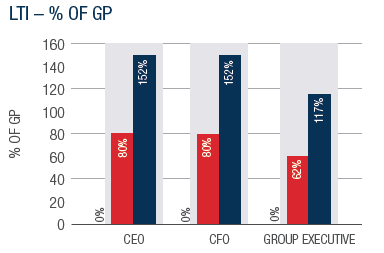
Once an allocation is made, the performance of the Company has a significant impact on the extent to which vesting occurs. The weighted impact of maximum outperformance in all KPAs is illustrated below.
The outcome of performance against vesting criteria shows that the LTIP 2017 allocation yielded only a partial vesting (80%) of the TSR component. In South Africa, the after-tax value generated from the scheme was utilised to purchase Life Healthcare shares in the open market which is then delivered to recipients' personal trading accounts. The details in respect of the Group executive are disclosed in the FY2020 Implementation report. Historical LTI 2018 allocation Once-off alternative LTI scheme 2018 As detailed in our 2018 remuneration report, the 2018 offer in terms of the 2015 LTIP scheme was not made as a result of the Company being in an extended closed period since November 2017. In order to provide a consistent pattern of long-term incentive awards, an alternative once-off long-term bonus scheme was approved by the Board to cover this period. One of the major limitations in scheme selection was the fact that we could not use any scheme that utilises the Life Healthcare share as a building block to determine the number of units awarded to participants (as a consequence of operating under a cautionary). The once-off alternative offering is based on an additional third of the FY2018, FY2019 and FY2020 short-term bonus outcomes which will be banked and payment will be made in January 2021 to coincide with the date when the normal LTIP 2018 allocation would have vested. The details will be provided in the 2021 remuneration report. This will be the final payment in respect of this allocation. |
|||||||||||||||||||||||||||||||||||||||||||||||||||||||||||||||||||||||||||||||||||||||||||||||||||||||||||||||||||||||||||||||||||||||||||||||||||||||||||||||||||||||||||||||||||||||||||||||||||||||||||||||||||||||||||||||||||||||||||||||||||||||||||||||||||||||||||||||
2.15 |
Other incentive schemes
|
|||||||||||||||||||||||||||||||||||||||||||||||||||||||||||||||||||||||||||||||||||||||||||||||||||||||||||||||||||||||||||||||||||||||||||||||||||||||||||||||||||||||||||||||||||||||||||||||||||||||||||||||||||||||||||||||||||||||||||||||||||||||||||||||||||||||||||||||
2.16 |
Share-based awards
Employee share plan (southern Africa) Policy The Remcom agreed to a further purchase of Life Healthcare shares to the value of R20 million for the benefit of qualifying employees this year. Despite the reduced purchase, the decrease in the share price will result in the acquisition of more shares per employee and creates a greater upside potential for participants. These shares will be held in a Trust until years 5, 6 and 7, where vesting will occur as follows, provided participants are still in the employ of the Company:
The shares, or the after tax equivalent in cash, are transferred from the Trust to the employee at vesting. Employees who resign or are dismissed during the duration of the scheme will lose their rights to all allocations made, and their rights will be distributed equally among the remaining employees. Thus, the number of rights will increase by the time of transfer of shares to remaining employees. Good leavers, for example those who are retrenched or retire, will have the proportionate number of shares they hold at the time of termination paid out to them, less tax and costs. They will no longer participate in the employee share plan. The scheme is fully ramped up to provide 100% vesting to each employee who have been employed since inception of the scheme. Vesting The vesting of 50% of the 2013 grant and 25% of the 2014 and 2015 ESP grants occurred at the end of June 2020. The majority of participants (95%) opted to sell their shares. |
|||||||||||||||||||||||||||||||||||||||||||||||||||||||||||||||||||||||||||||||||||||||||||||||||||||||||||||||||||||||||||||||||||||||||||||||||||||||||||||||||||||||||||||||||||||||||||||||||||||||||||||||||||||||||||||||||||||||||||||||||||||||||||||||||||||||||||||||
2.17 |
Once-off gratuity payment (southern Africa)The COVID-19 pandemic caused a number of operational challenges. The State launched a major recruitment campaign for critical nursing skills and the Company lost a number of key resources, especially in the Eastern Cape region. Concurrently, whilst the Company paid all employees in full at all times, many employee households came under severe financial pressure as a result of job losses of partners or close family members. To stem the outflow of key clinical skills and assist our employees during this difficult time, the Company decided to pay a once-off gratuity bonus to all permanent employees, who do not participate in the long-term incentive scheme. This payment also served as recognition for the incredible efforts, bravery and commitment of employees during the COVID-19 surge. The value of the total payment made amounted to R45 million and was distributed equally to approximately 15 000 SA employees. |
|||||||||||||||||||||||||||||||||||||||||||||||||||||||||||||||||||||||||||||||||||||||||||||||||||||||||||||||||||||||||||||||||||||||||||||||||||||||||||||||||||||||||||||||||||||||||||||||||||||||||||||||||||||||||||||||||||||||||||||||||||||||||||||||||||||||||||||||